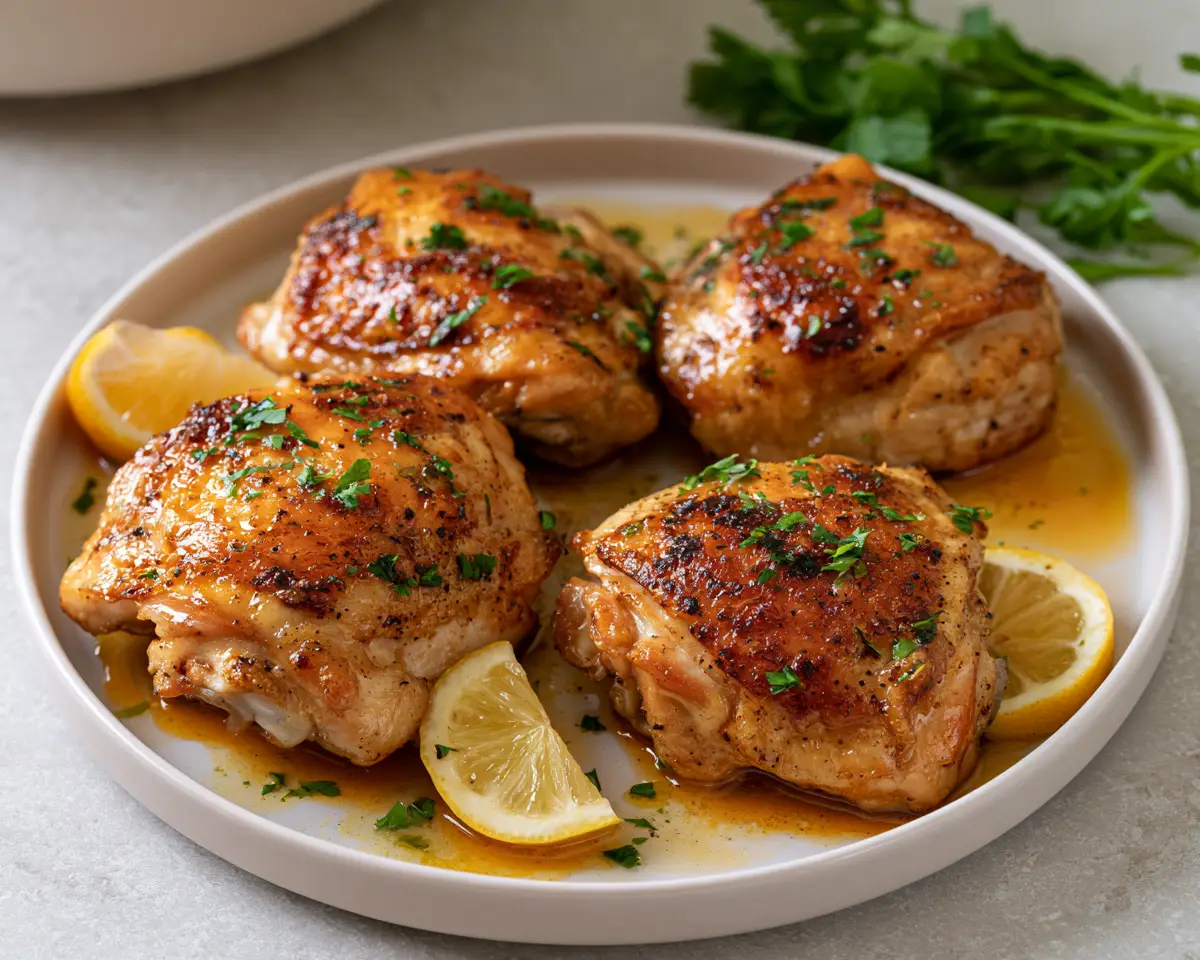
Crock Pot Chicken Thighs
Tender, juicy, and coated in a savory-sweet garlic sauce, these crock pot chicken thighs are an easy dinner for busy nights. Boneless, skinless chicken thighs cook gently in the slow cooker with garlic, honey, Dijon mustard, soy sauce, paprika, and herbs, creating flavorful chicken with very little hands-on work. The finished chicken is tender enough to cut with a fork, while the cooking juices can be thickened into a simple sauce for spooning over the top.
This recipe works especially well when you want a comforting dinner without standing over the stove. Serve the chicken with mashed potatoes, rice, roasted vegetables, or a crisp green salad, and save the leftovers for sandwiches, wraps, grain bowls, or another quick meal.
Why You’ll Love This Recipe
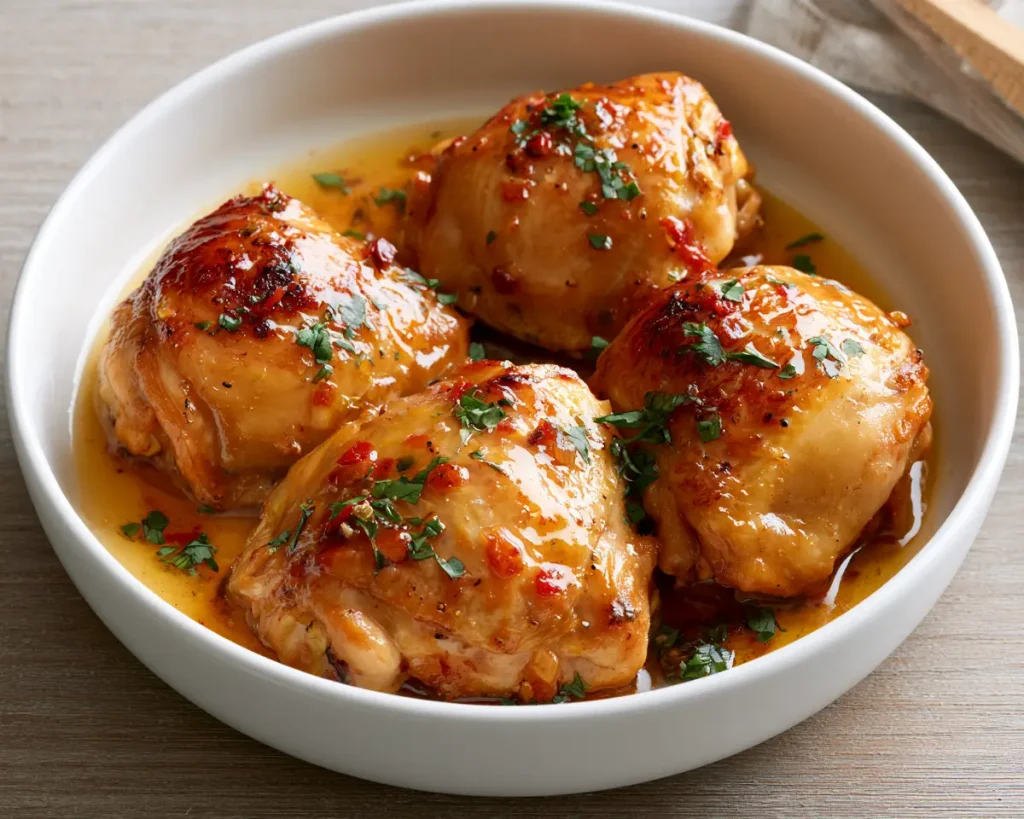
- Mostly hands-off cooking: Once the ingredients are in the slow cooker, the Crock Pot does most of the work.
- Juicy chicken thighs: Dark meat is naturally flavorful and well suited to gentle, longer cooking.
- Simple pantry ingredients: Soy sauce, honey, garlic, Dijon mustard, and common spices create a flavorful sauce without a long ingredient list.
- Flexible serving options: The chicken works with rice, potatoes, noodles, vegetables, or a simple salad.
- Good for leftovers: Cooked thighs can be refrigerated and used in several different meals throughout the week.
- Easy to customize: You can make the sauce sweeter, spicier, more savory, or more herb-forward without changing the basic cooking method.
Ingredients You’ll Need
Chicken thighs
Use about 2½ pounds of boneless, skinless chicken thighs. Thighs are a practical choice for slow cooking because they remain flavorful and tender as they cook.
If your package contains unusually large thighs, they may need additional cooking time. The most important measure of doneness is the internal temperature, not simply the clock.
Low-sodium chicken broth
A small amount of chicken broth provides moisture for the cooking environment and helps form the base of the sauce. Low-sodium broth gives you more control over the finished salt level because soy sauce already contributes plenty of seasoning.
Low-sodium soy sauce
Soy sauce supplies salt and deep savory flavor. If you only have regular soy sauce, reduce the added salt in the recipe rather than using the two interchangeably at the same quantity.
Honey
Honey balances the salty soy sauce and adds a subtle sweetness to the cooking liquid. It also helps give the finished sauce a richer flavor.
Dijon mustard
Dijon adds acidity and a mild mustard bite that keeps the sauce from tasting overly sweet. It blends into the cooking liquid rather than making the chicken taste strongly of mustard.
Garlic
Fresh minced garlic gives the sauce a more pronounced flavor than garlic powder. Six cloves may sound like a lot, but the flavor mellows considerably during slow cooking.
Paprika and dried thyme
Paprika provides gentle warmth and color, while dried thyme adds an earthy herbal note. Regular paprika works well; smoked paprika can be used if you want a deeper, smokier flavor.
Cornstarch
Cornstarch is optional but useful if you want a thicker sauce. It should be mixed with cold water before being added to the hot cooking liquid so it disperses smoothly rather than forming lumps.
Fresh parsley
Parsley is optional for serving, but a small amount of fresh chopped parsley gives the finished dish a fresh contrast and makes the plate look more finished.
How to Make Crock Pot Chicken Thighs

1. Prepare the chicken
Pat the chicken thighs dry with paper towels. Trim away large pieces of excess fat, but there is no need to remove every small piece.
Season both sides with the salt, black pepper, paprika, and dried thyme.
Patting the chicken dry helps the seasoning adhere more evenly. It also prevents excess surface moisture from diluting the seasoning before the chicken goes into the slow cooker.
2. Mix the sauce
In a small bowl or measuring cup, whisk together:
- ½ cup low-sodium chicken broth
- ¼ cup low-sodium soy sauce
- 3 tablespoons honey
- 2 tablespoons Dijon mustard
- 6 minced garlic cloves
Whisk until the honey and mustard are reasonably well incorporated.
The sauce will look relatively thin at this stage. That is normal. The goal is to create a flavorful cooking liquid rather than a thick glaze before cooking.
3. Add everything to the slow cooker
Lightly coat a 6-quart slow cooker with cooking spray if desired.
Arrange the seasoned chicken thighs in the bottom of the slow cooker in as even a layer as possible. Pour the sauce over the chicken.
The chicken does not need to be completely submerged. Avoid adding extra broth simply because some of the chicken remains above the liquid. Chicken releases moisture as it cooks, and too much liquid can leave you with a thinner sauce.
4. Cook on LOW
Cover the slow cooker and cook on LOW for approximately 4 to 5 hours, or until the thickest pieces reach at least 165°F on a food thermometer.
Cooking time can vary considerably depending on the size of the thighs, how full the slow cooker is, and the particular appliance.
Start checking toward the earlier end of the cooking window rather than automatically leaving the chicken for the maximum time. Chicken thighs can tolerate more cooking than chicken breast, but excessively long cooking can still produce a softer, less pleasant texture.
For food safety, poultry should reach a minimum internal temperature of 165°F as measured with a food thermometer.
5. Thicken the sauce, if desired
Once the chicken is cooked, carefully transfer the thighs to a serving plate and loosely cover them.
Pour approximately 1 cup of the cooking liquid into a small saucepan.
In a small bowl, stir together:
- 1 tablespoon cornstarch
- 2 tablespoons cold water
Whisk until smooth.
Bring the reserved cooking liquid to a gentle simmer over medium heat. Slowly whisk in the cornstarch mixture and cook for about 1 to 2 minutes, stirring frequently, until the sauce becomes glossy and lightly thickened.
If the sauce becomes thicker than you want, whisk in a tablespoon or two of water or additional broth.
6. Serve
Return the chicken to the thickened sauce or spoon the sauce over the chicken just before serving.
Garnish with chopped fresh parsley if desired.
For the best texture, serve the chicken while it is hot and spoon plenty of the savory sauce over each portion.
Expert Tips for the Best Results
Use boneless, skinless thighs for the easiest version
Boneless, skinless thighs fit neatly into the slow cooker and are easy to portion once cooked. Bone-in thighs also work, but they may require additional cooking time and can produce a somewhat different amount of cooking liquid.
Don’t add too much liquid
A slow cooker traps moisture, and chicken itself releases juices during cooking. The small amount of broth in this recipe is intentional. Adding substantially more liquid can make the sauce watery and dilute its flavor.
Don’t skip the thermometer
Color and texture are useful clues, but a food thermometer is the most reliable way to check that poultry has reached the safe minimum internal temperature of 165°F.
Insert the thermometer into the thickest part of a thigh without touching the slow cooker’s surface.
Avoid opening the lid repeatedly
Every time the lid is removed, heat escapes and cooking slows down. Check the chicken only when necessary, particularly near the expected end of the cooking period.
Choose LOW when you have the time
The LOW setting provides a gentler cooking environment and is convenient for a longer cooking schedule. If you need dinner sooner, the HIGH setting can be used, but the exact cooking time should still be determined by the chicken’s temperature and tenderness rather than the clock alone.
Let the sauce do the finishing work
The chicken itself is seasoned, but the sauce is what ties the dish together. If the cooking liquid tastes too salty, don’t immediately add more soy sauce. If it tastes too sweet, a small amount of Dijon or a splash of broth can help rebalance it.
Thicken only the amount of sauce you need
Instead of thickening all of the liquid in the slow cooker, reserve a portion and thicken it separately. This gives you much more control over consistency and makes it easier to adjust the sauce before serving.
Common Mistakes to Avoid
Using frozen chicken directly in the slow cooker
For this recipe, thaw the chicken before putting it into the slow cooker. USDA guidance recommends thawing meat or poultry before slow cooking because frozen pieces can take too long to reach a safe temperature.
Adding too much broth
It can be tempting to cover the chicken completely with liquid, but a slow cooker is a moist cooking environment. Extra broth can make the final sauce bland and watery.
If you’ve already added too much liquid, remove some of it near the end of cooking and reduce it separately in a saucepan.
Cooking only by the stated time
Slow cooker performance varies. A 4-hour cooking time is a useful starting point, not a guarantee that every batch will finish at exactly the same moment.
Check the thickest piece with a thermometer.
Expecting crisp skin
This recipe is designed for boneless, skinless chicken thighs. If you substitute skin-on thighs, the skin will generally not become crisp inside a covered slow cooker.
If crisp skin is important, brown the chicken separately and finish it under a broiler or in a hot oven after slow cooking. That changes the method and should be kitchen-tested before publication.
Thickening the sauce with dry cornstarch
Do not sprinkle dry cornstarch directly into hot liquid. It can clump. Always mix it with cold water first to make a smooth slurry.
Recipe Variations and Substitutions
Make it spicy
Add ¼ to ½ teaspoon of crushed red pepper flakes to the sauce. For more heat, a small amount of cayenne pepper can also work, but add it gradually.
Use smoked paprika
Replace the regular paprika with smoked paprika for a deeper, more barbecue-like flavor.
Add mushrooms
Sliced mushrooms can be added around the chicken before cooking. They release moisture, so expect a thinner cooking liquid and adjust the amount of sauce accordingly.
Try boneless skin-on or bone-in thighs
Bone-in chicken thighs can be substituted, but cooking time will vary based on size. Make sure the thickest portion reaches 165°F.
Use chicken stock instead of broth
Chicken stock works in the same quantity. Because brands vary in sodium content, taste the finished sauce before adding additional salt.
Make it dairy-free
The core recipe contains no dairy, but always check the labels of packaged ingredients such as broth and Dijon mustard if you’re cooking for someone with a specific dietary restriction.
Gluten-free adaptation
Use a soy sauce specifically labeled gluten-free, and verify the labels of the broth, mustard, and other packaged ingredients. Do not assume that every brand of soy sauce is gluten-free.
What to Serve With Crock Pot Chicken Thighs
Mashed potatoes
Mashed potatoes are an especially good match because the thickened chicken sauce can be spooned directly over them.
Steamed rice
Rice provides a neutral base that absorbs the savory sauce. White rice, brown rice, or a simple rice pilaf can all work.
Roasted vegetables
Roasted broccoli, carrots, green beans, or Brussels sprouts provide color and texture alongside the tender chicken.
Egg noodles
Buttered egg noodles make the meal especially comforting and give the sauce another surface to cling to.
Simple green salad
A crisp salad with a lightly acidic dressing provides contrast to the rich chicken and sauce.
Crusty bread
A slice of crusty bread is useful for mopping up the remaining sauce and turns the chicken into a particularly easy weeknight meal.
These serving ideas also provide natural opportunities for future internal links to recipes such as mashed potatoes, roasted green beans, rice pilaf, homemade dinner rolls, or simple green salads.
Storage, Freezing, and Reheating
How to Store
Transfer leftover chicken and sauce to shallow, airtight containers and refrigerate promptly.
USDA guidance recommends refrigerating cooked leftovers within two hours and using refrigerated leftovers within 3 to 4 days.
Allowing food to cool somewhat before refrigerating is reasonable, but do not leave cooked chicken sitting at room temperature for an extended period.
Can You Freeze It?
Yes. Cooked chicken thighs can be frozen with some of the sauce in an airtight freezer-safe container.
For best quality, use frozen leftovers within approximately 3 to 4 months. USDA notes that frozen leftovers can remain safe longer when continuously frozen, but quality can decline over time.
For easier reheating, freeze individual portions rather than one large container.
How to Reheat
Thaw frozen portions in the refrigerator when possible.
Reheat the chicken and sauce on the stovetop over medium-low heat, in the oven, or in the microwave until the chicken reaches 165°F. USDA recommends reheating leftovers to 165°F and does not recommend using a slow cooker as the reheating method because food can remain too long in the temperature danger zone.
If the sauce becomes too thick during reheating, add a small splash of broth or water.
Make-Ahead Instructions
The sauce ingredients can be measured and combined in advance and refrigerated until you’re ready to cook.
For food safety and best quality, keep the raw chicken refrigerated until cooking time. Do not assemble raw chicken and leave it sitting at room temperature.
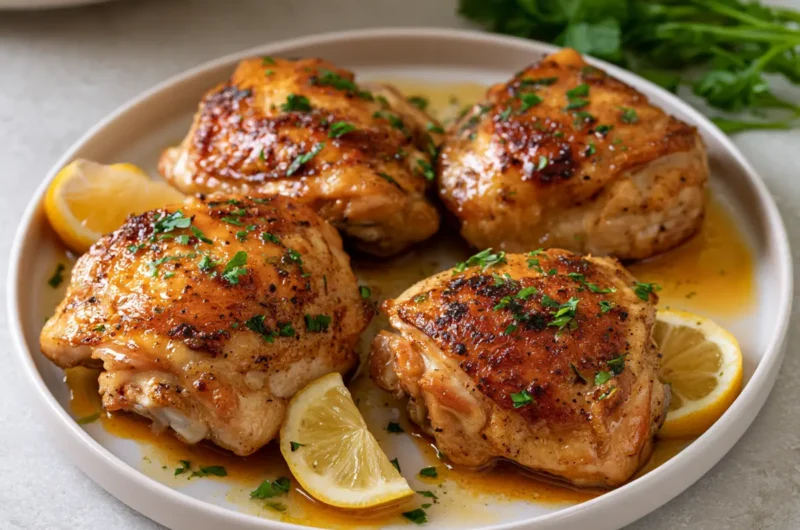
Crock Pot Chicken Thighs
Course: Uncategorized6
servings15
minutes4
minutes360
kcalTender boneless chicken thighs slow-cooked in a savory-sweet garlic sauce made with honey, Dijon mustard, soy sauce, and herbs. An easy slow cooker dinner with a flavorful homemade sauce.
Ingredients
2½ pounds boneless, skinless chicken thighs
1 teaspoon kosher salt
½ teaspoon black pepper
1 teaspoon paprika
1 teaspoon dried thyme
½ cup low-sodium chicken broth
¼ cup low-sodium soy sauce
3 tablespoons honey
2 tablespoons Dijon mustard
6 garlic cloves, minced
1 tablespoon cornstarch
2 tablespoons cold water
2 tablespoons chopped fresh parsley, optional
Directions
- Pat the chicken thighs dry with paper towels and trim away any large pieces of excess fat.
- Season both sides of the chicken with kosher salt, black pepper, paprika, and dried thyme.
- Whisk together the chicken broth, soy sauce, honey, Dijon mustard, and minced garlic.
- Place the seasoned chicken thighs in an even layer in a 6-quart slow cooker. Pour the sauce over the chicken.
- Cover and cook on LOW for approximately 4–5 hours, or until the thickest part of the chicken reaches at least 165°F (74°C).
- Transfer the cooked chicken to a serving plate and loosely cover.
- Pour about 1 cup of the cooking liquid into a small saucepan and bring it to a gentle simmer.
- Whisk together the cornstarch and cold water until smooth.
- Slowly whisk the cornstarch mixture into the simmering cooking liquid. Cook for 1–2 minutes, stirring frequently, until lightly thickened.
- Spoon the sauce over the chicken. Garnish with fresh parsley if desired and serve hot.
Recipe Video
Notes
- For the best results, use boneless, skinless chicken thighs of similar size so they cook evenly.
- Avoid lifting the slow cooker lid too often while cooking, as this can release heat and increase the cooking time.
Frequently Asked Questions
Can I use bone-in chicken thighs?
Yes. Bone-in thighs can be used, but they may require more cooking time than boneless thighs. Arrange them in a single layer when possible and verify doneness with a thermometer.
Can I use frozen chicken thighs?
For this slow-cooker method, thaw the chicken first. USDA specifically recommends thawing meat and poultry before putting them into a slow cooker.
Do chicken thighs get more tender the longer they cook?
Chicken thighs are relatively forgiving, but longer cooking is not automatically better. Once the chicken is safely cooked and tender, continued cooking can eventually produce a softer texture and make the meat less appealing.
Can I make the sauce thicker?
Yes. Remove about 1 cup of cooking liquid, bring it to a gentle simmer in a saucepan, and whisk in a cornstarch slurry made with 1 tablespoon cornstarch and 2 tablespoons cold water.
Can I use chicken breasts instead?
You can, but chicken breasts are leaner and are more prone to becoming dry when overcooked. If substituting breasts, use the same food-safety temperature but begin checking them earlier.
Can I brown the chicken first?
Yes. Browning the thighs in a skillet before slow cooking can add a deeper roasted flavor. It is optional, though, and adds another pan and several minutes of preparation.
How do I know when the chicken is done?
Check the thickest part of the chicken with an instant-read thermometer. Poultry should reach at least 165°F.
Final Thoughts
These crock pot chicken thighs are built around the strengths of slow cooking: minimal hands-on work, tender dark meat, and a flavorful cooking liquid that can become a simple sauce. The combination of garlic, honey, Dijon, soy sauce, and herbs gives the chicken plenty of flavor without requiring a complicated preparation. Serve it with potatoes, rice, vegetables, or noodles for a straightforward dinner, and refrigerate the leftovers for another meal during the week